
Jersey Printing Vs Embroidery
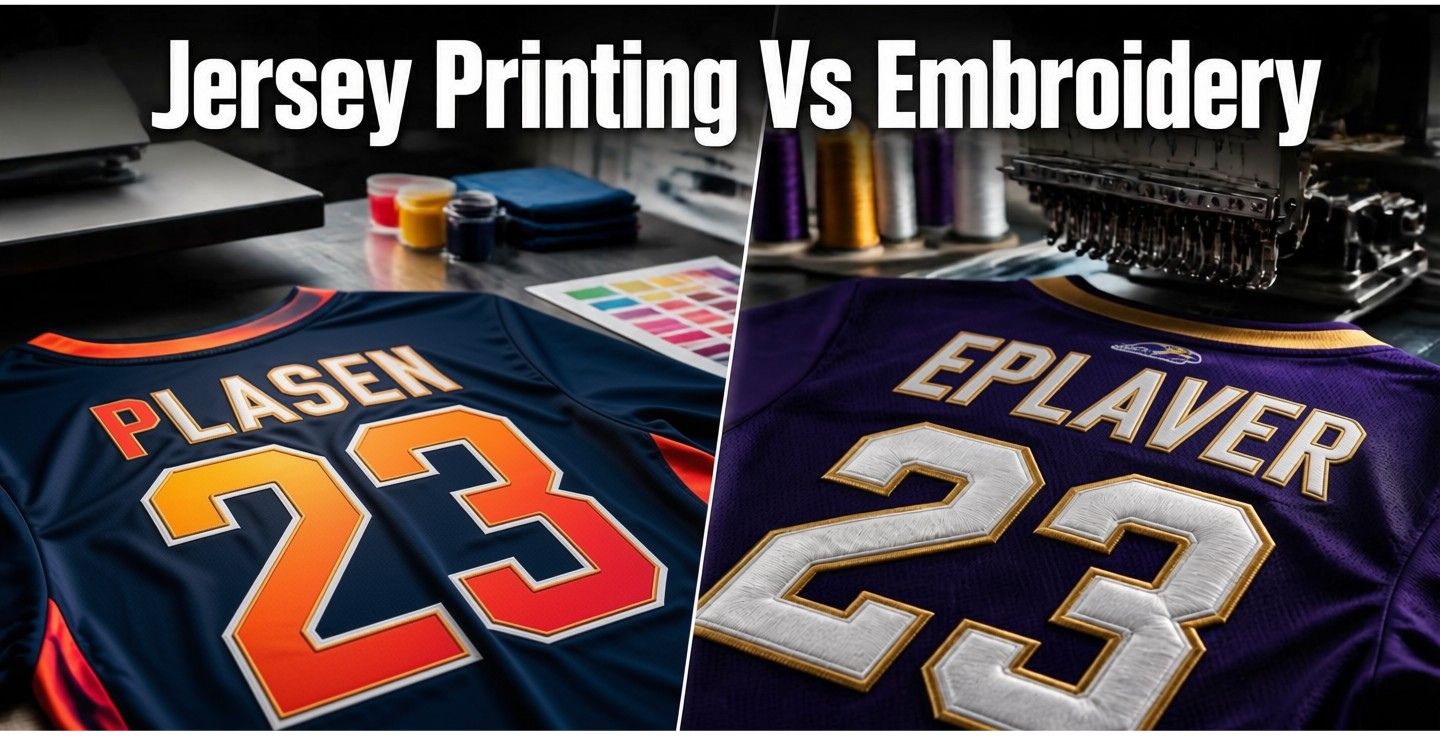
Few things shape a team’s identity as much as its kit. Well-made custom jerseys build unity, showcase sponsors, and make your team instantly recognisable, whether you run a Sunday league football side, a cycling club or a school rugby team.
The two most popular decoration methods for sports uniform printing are printing and embroidery. Each has strengths, and the right choice depends on your budget, design and how the kit will be used. At Custom Jerseys UK, we help clubs, schools and businesses make that decision with confidence. This blog will explain the practical differences between jersey printing and embroidery and help you choose the right option for personalised sportswear.
What Are Custom Jerseys?
Custom jerseys are sports shirts designed to a team’s specifications. The top options typically include:
- Club logos and crests
- Player names and numbers
- Personalised team jerseys
- Sponsor jersey branding
- Team colours and sports kit design
Customising apparel reinforces team identity beyond looks and gives sponsors visible exposure. It is a core part of sports branding at every level, from grassroots to semi-professional.
What Is Jersey Printing?
Jersey printing is the process of applying a design to the surface of the fabric. The main methods are:
- Digital printing: It is ideal for detailed, multi-colour artwork.
- Screen printing: It is durable and cost-effective for larger runs.
- Heat transfer printing: This is popular for names, numbers, and small batches.
- Sublimation printing: In this method, dye is infused into the fabric, producing sublimated jerseys with vibrant and full-coverage designs.
Printing offers excellent colour flexibility, a lightweight finish, and the ability to reproduce large graphics. That is why sportswear printing dominates modern performance apparel.
What Is Jersey Embroidery?
Embroidery uses thread stitched directly into the garment. The result is a raised, textured finish that looks premium and professional. Logo embroidery is especially popular for corporate sports branding solutions, club polos, training jackets, and smart teamwear. Professional jersey embroidery services can produce durable embroidered logos that withstand regular wear when you do proper sports merchandising and maintain them.
Printed designs sit on or within the fabric, while embroidered jerseys feature a physical stitched layer. Good embroidered sportswear can be extremely hard-wearing, but it suits smaller logos better than large, colour-heavy graphics.
Jersey Printing Vs Embroidery: Key Differences
The following are the quick differences between embroidery vs printing of custom athletic apparel.
| Factor | Printing | Embroidery |
| Appearance | Smooth, flat, highly detailed | Raised, textured, premium |
| Durability | Strong, especially sublimation | Very strong on suitable fabrics |
| Comfort | Lightweight, no added bulk | Slightly heavier, may feel stiffer |
| Design limits | Few gradients and full coverage possible | Limited detail and colour count |
| Colour options | Virtually unlimited | Limited by thread colours |
| Cost | Often better for complex or large designs | Often better for simple small logos |
Neither method is universally better for sports uniforms. The best choice depends on the design and the garment.
Which Option Is Better For Sports Teams?
Several options are ideal for making sports team jerseys.
- Football and rugby: Printing is best, especially sublimation, which suits match-day jerseys because it’s lightweight and breathable.
- Basketball and baseball: Printing works well here for numbers and large lettering, and embroidery can add a classic look to crests and logos.
- Cycling: Printing keeps fabrics light and stretchy for performance.
- Training apparel and leisurewear: Embroidered logos suit jackets, polos, and hoodies.
- Business and school uniforms: Embroidery gives a smart, lasting finish.
Why Custom Football Jerseys Often Use Printing
Most custom football jerseys are printed, and it is for good reason:
- Lightweight performance: Printing adds no bulk, so breathable fabrics keep their feel.
- Large sponsor logos: Big graphics are easy to reproduce.
- Names and numbers: Football jersey printing delivers sharp and consistent lettering.
- Vibrant colours: Sublimation technology produces rich, lasting colour.
Printing generally balances performance, appearance, and cost best for competitive football apparel. Embroidered club badges can still feature on casual or off-pitch kit.
Print-on-Demand Cycling Jerseys and Modern Sportswear Production
Print-on-demand cycling jerseys have grown in popularity because they remove many traditional barriers. Instead of committing to large minimum orders, clubs can order smaller quantities, add custom rider names and reorder as the membership changes. Its benefits include:
- Small order quantities suited to cycling clubs
- Easy personalisation for individual riders
- Performance fabrics designed for comfort and moisture management
- Faster production and less excess stock
This flexible approach to sportswear manufacturing suits clubs for cycling team jerseys and custom cycling apparel that grow or change regularly.
Cost Comparison Between Printing And Embroidery
Costs of jersey decoration vary according to project, but these factors usually matter most:
- Setup costs: Screen printing and embroidery digitising may involve initial fees.
- Design complexity: Many colours can raise embroidery costs, but digital and sublimated printing can handle complexity more easily.
- Quantity: Larger orders typically reduce the cost per item.
- Logo size: Large embroidered designs use more thread and take more time.
- Materials: Fabric choice affects both method and price.
Small, simple logos often suit embroidery. Complex, large or full-coverage designs for custom sports jerseys are usually more economical when printed.
Factors To Consider Before Choosing a Customisation Method
Before you choose any of the customisation methods for custom teamwear, you should ask yourself:
- Intended use: match-day performance or everyday wear?
- Budget: include setup and reorder costs.
- Design: colours, detail and size.
- Fabric: some performance fabrics don’t suit embroidery.
- Quantity: small batches or a full squad?
- Brand image: sleek and modern, or classic and premium?
- Durability: how often will the kit be washed and worn?
- Turnaround: do you have a fixed deadline for making these jerseys?
Common Mistakes When Ordering Custom Jerseys
- Wrong decoration method: Heavy embroidery on lightweight fabric can cause puckering.
- Ignoring fabric compatibility: You should always check that the method is best for the material.
- Poor logo placement: You should make sponsor logos visible and balanced.
- Overcomplicated designs: Simple layouts read better at a distance.
- Incorrect sizing: Order a size guide or sample first.
- Low-resolution artwork: Supply vector files wherever possible.
Why Choose Professional Custom Jersey Suppliers?
An experienced supplier removes the guesswork from jersey customisation. At Custom Jerseys UK, you get expert recommendations, quality production, material expertise, and a wide range of customisation options for team uniforms. We also offer reliable delivery and professional support, so your team uniform customisation stays consistent across every order. That consistency protects your brand for clubs, schools, and businesses seeking professional sports kits.
FAQs
1. Is jersey printing better than embroidery?
No, it is not fixed that one is better. Printing suits detailed, colourful and large designs, but embroidery suits small logos and a premium look.
2. What is the difference between printed and embroidered jerseys?
The main difference between both is that printed jerseys have designs applied to or infused into the fabric, and embroidered jerseys have designs stitched in thread.
3. Are custom football jerseys usually printed or embroidered?
Most athletic clothing is printed, often by sublimation, for lightweight and breathable performance.
4. How durable is jersey embroidery?
Embroidery for jersey manufacturing is very durable when suited to the fabric, though heavy stitching may not suit thin sportswear.
5. What are print-on-demand cycling jerseys?
Cycling jerseys that are produced in small quantities as ordered, allowing custom rider names and flexible reordering.
6. Which option is more cost-effective for sports teams?
The cost-effective option depends on the requirements. Printing often wins for complex designs and larger runs, while embroidery can suit simple, small logos.
7. Can embroidery be used on performance sportswear?
Yes, you can use embroidery on suitable fabrics and with small designs, but printing is usually preferred for lightweight performance professional sportswear.
8. Which customisation method lasts longer?
Both of them can last well for custom apparel. Sublimation and quality embroidery are especially long-lasting when properly cared for.
9. What factors should I consider before ordering custom jerseys?
You should think about use, budget, design, fabric, quantity, brand image and deadline.
10. How do I choose the right sportswear supplier?
You should look for fabric expertise, clear advice, quality samples, reliable delivery and proven experience with teams like yours.
Conclusion
Printing and embroidery each have a place. Printing excels for colourful, lightweight, large-format designs, which is why it leads for custom football jerseys and print-on-demand cycling jerseys. Embroidery jerseys offer a textured, premium finish ideal for corporate branding and casual team wear.
Choosing the right one depends on your design, fabric, budget, and purpose. Before ordering custom sports clothing, talk to an experienced custom teamwear provider. Quality sportswear production and professional customisation of personalised jerseys will help your team look sharp and perform with pride.

I’m a passionate fashion blogger and the founder of customjerseys.co.uk, a platform dedicated to the art of custom jersey design and modern sports fashion. With a deep appreciation for creativity and individuality, I explore the latest trends in designer-inspired jerseys, streetwear culture, and personalized apparel that blends comfort with bold style. Through my blog, I share styling advice, design inspiration, and insights into the evolving world of custom sportswear. My goal is to help readers express their unique identity through standout pieces that make a statement both on and off the field. I believe fashion is more than clothing—it’s confidence, personality, and self-expression.